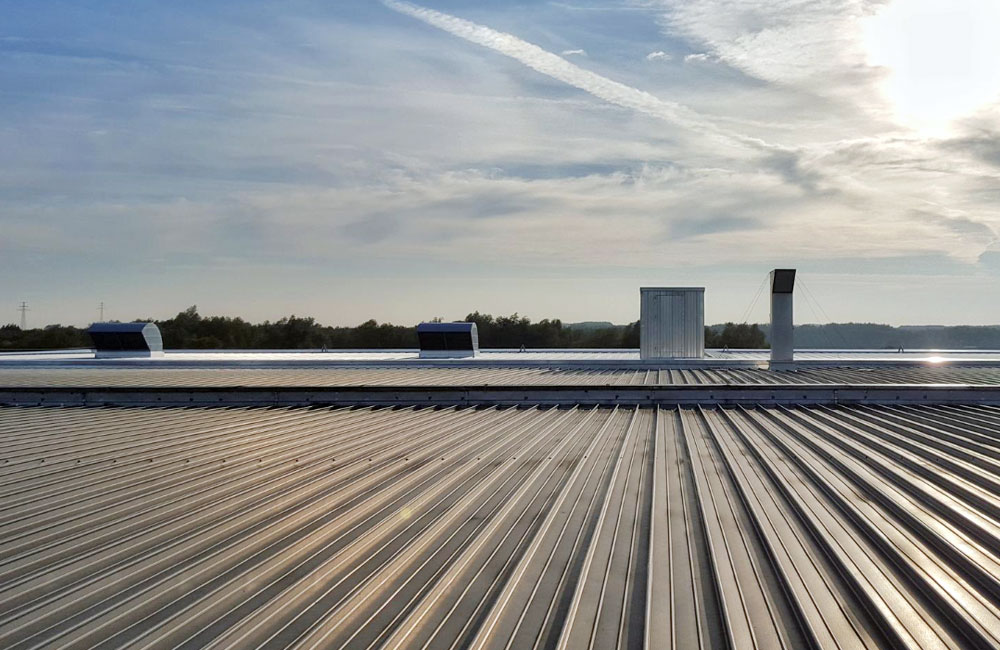

Roof and Facade Panels
The most important part of a reinforced concrete or prefabricated building is its roof, which covers the structure. Roofs come in various types, but generally, there are eight main categories:
- Single-Slope Roof
- Hip Roof
- Gable Roof
- L-Shaped Hip Roof
- L-Shaped Roof
- T-Shaped Roof
- Double Single-Slope Roof
- A-Shaped Roof
The roof, as the final cornerstone of the building, is the second most critical structural component after the foundation. Therefore, selecting high-quality materials and panels is crucial to prevent excessive wear, avoid additional costs for insulation, and minimize potential structural or aesthetic damage over time.
The types of roof panels can be categorized as follows:
- 3-Rib Panels
- 5-Rib Panels
- Membrane Panels
- FRP (Fiberglass Reinforced Plastic) Panels
3-Rib roof panels have an insulation density of up to 40–42 kg/m³ and are typically made of polyurethane.
5-Rib roof panels can reach an insulation density of up to 90 kg/m³ and can be manufactured from stone wool or glass wool in addition to polyurethane.
Membrane roof panels have a maximum insulation density of 120 kg/m³ and are usually made exclusively from stone wool.
FRP roof panels are generally produced using 5-Rib panels and differ from other types by distributing loads more evenly.
The same care applied to the insulation and construction of roof panels is also given to facade panels, as both are essential elements that complete the building.
Facade panels provide protection against water, heat, cold, and sound, and also play a critical role in fire safety.
Facade panels are usually made from aluminum or galvanized steel. The most common insulation materials used in facade panels are polyurethane and polyisocyanurate, though stone wool may occasionally be used in special cases.
Professional installation is essential for both roof and facade panels. Regardless of material quality, improper installation can prevent the desired performance and protection.